

Logistics no longer competes on cost alone. It competes on visibility, responsiveness and adaptability. In an environment defined by tight margins, volatile demand and full traceability requirements, real-time visibility over assets and operational flows has become a strategic asset. Advanced location intelligence turns operational data into measurable performance gains. By combining outdoor geolocation, indoor positioning, automation and system integration, organisations can optimise routes, reduce non-productive time, streamline order fulfilment and gain end-to-end control across the supply chain. Strategic planning moves from assumption-based to data-driven.
GPS for route optimisation
Operational efficiency depends on two critical variables: movement and position. Knowing where assets are, and how they move, allows logistics leaders to redesign entire processes.
Indoor Positioning when GPS fails
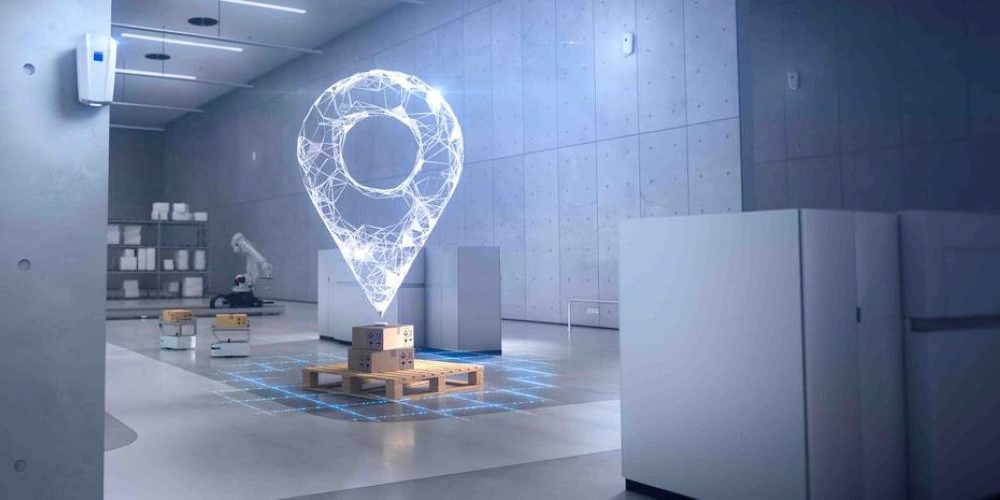
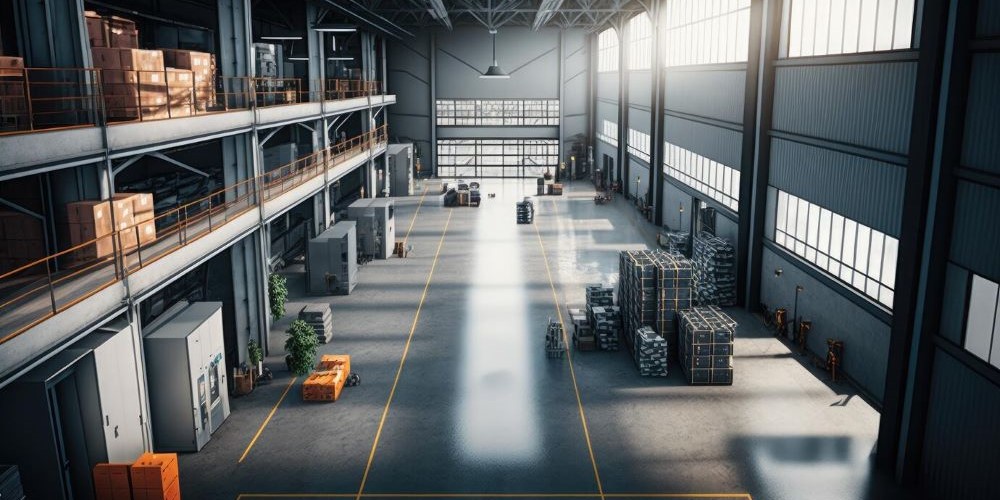
The real operational blind spot begins once assets move indoors. Warehouses, distribution hubs and production facilities are environments where satellite-based positioning simply disappears. Without indoor visibility, traceability breaks, manual processes increase and data reliability drops. This is where dedicated indoor positioning technologies become critical for maintaining end-to-end control.
Indoor Positioning Technologies: Capabilities and Trade-offs
Multiple technologies compete to provide indoor positioning. However, their suitability depends on environmental complexity, required accuracy, infrastructure constraints and long-term scalability.
- Ultra Wide Band: Ultra Wideband (UWB) delivers high precision positioning. However, it requires dense infrastructure and line-of-sight conditions. In metallic or highly complex environments, deployment costs increase significantly and performance can be affected by signal obstruction.
- WiFi: Wi-Fi-based positioning leverages existing infrastructure, making implementation simpler. Yet, its limited accuracy makes it unsuitable for high-performance industrial environments where operational decisions depend on reliable, real-time location data.
- Bluetooth: Bluetooth Low Energy (BLE) offers cost efficiency and flexibility. However, it also requires dense beacon deployment and delivers moderate accuracy. In large industrial facilities, scaling BLE can quickly increase infrastructure and maintenance complexity.
- Sileme: Sileme is purpose-built for indoor positioning. It does not rely on line-of-sight conditions and performs reliably in metallic and complex industrial environments. Accuracy is scalable according to business needs, and large surfaces can be covered with minimal infrastructure, reducing deployment and maintenance overhead.
Strategic use cases in logistics optimisation
Advanced positioning systems do more than improve visibility — they reshape operational processes and unlock measurable efficiency gains.
Smarter order fulfilment through automation and positioning
Combining automated shuttle systems, intelligent picking structures and real-time positioning reduces search time, minimises errors and accelerates fulfilment cycles. The result is higher throughput without increasing operational complexity.
End-to-End Flow Optimisation
When route intelligence integrates with warehouse visibility, organisations optimise both transportation and internal flows. This reduces delivery lead times and transportation costs while increasing service reliability.
Intelligent Inventory and Layout Optimisation
By implementing technological solutions for storage and efficient inventory management, organisations can maximise storage space and speed up product retrieval, improving the overall efficiency of logistics operations. Indoor positioning systems such as Sileme generate a historical record of movements and locations. This enables warehouse layout optimisation and better product placement, positioning high-rotation items in more accessible areas and placing low-usage items in less accessible zones, while always guaranteeing, with full security and precision, the exact location of each asset.
Minimising Human Error in Warehouse Operations
Thanks to the real-time location of products through indoor positioning technologies such as Sileme, we avoid relying on human actions to locate and place products in large logistics centres and warehouses. In the event of an error when placing a product in a specific location, the indoor positioning system can alert us to the mistake or automatically update the location in our management system. This enables real-time control of the warehouse, locations and inventory
Key Benefits of Advanced Technological Solutions
In the era of Industry 4.0, logistics optimisation through advanced location technologies has become a critical factor for companies. The ability to adapt to constant market changes and deliver efficient service is essential to remain competitive.
In the era of Industry 4.0, logistics optimisation through advanced location technologies has become a critical factor for companies. The ability to adapt to constant market changes and deliver efficient service is essential to remain competitive.
The implementation of advanced technological solutions in logistics offers a range of significant benefits and advantages. Firstly, it enables task automation, reducing human error and improving process accuracy. In addition, digitalization and the use of technologies such as radio frequency identification (RFID), indoor positioning and barcodes streamline product tracking and location processes.
Another key benefit is improved operational efficiency. Optimising routes and workflows reduces delivery times and minimises transport costs. Likewise, inventory management and control are enhanced through the use of warehouse management software (WMS), ensuring better stock level management and greater product availability.
Additional Tools and Technologies for Logistics Optimisation
Solutions to Optimise Order Picking
- Automated shuttle systems: These systems streamline and optimise the order picking process by automatically transporting products from storage areas to packing stations.
- Picking racks for pallets and boxes: These storage solutions are designed to facilitate organisation and quick access to products, reducing order preparation times.
Automation in Product Transport and Storage
- Roller conveyors and stacker cranes: These automated systems enable efficient product movement within the warehouse, optimising time and reducing the risk of human error.
- Automated warehouses for pallets and boxes: These systems use advanced technology, such as stacker cranes and automated conveyors, to store and retrieve products efficiently, saving space and improving workflow.
Inventory management and control in advanced logistics
- Use of WMS software in inventory management: Warehouse management systems (WMS) integrated with advanced technology provide precise control over inventory levels, enable real-time tracking of each item and optimise replenishment and storage processes.
- Customised storage solutions: By implementing tailored storage systems, available space can be maximised, increasing storage capacity and ensuring optimal product placement.
- High-performance picking optimisation: The implementation of advanced strategies and technologies in the picking process enables more efficient operations, increasing accuracy and reducing the time required to complete each order.
Improved Visibility and Control of Logistics Operations
- Use of real-time management and monitoring systems: The implementation of logistics management and real-time location systems such as Sileme provides greater visibility across all stages of the process, from goods reception to final delivery. This enables data-driven decision-making and workflow optimisation.
- Application of identification and tracking technologies: The use of technologies such as radio frequency identification (RFID) and barcodes facilitates accurate product tracking and location, improving inventory management precision and speeding up order preparation.
Key Considerations for Technological Innovation in the Supply Chain
Efficient strategic planning is essential to achieve successful logistics optimisation. Firstly, it is crucial to consider the specific needs of each business and adapt the plan accordingly. Demand volumes, delivery times and product characteristics must also be taken into account to ensure smooth supply chain management.
It is also necessary to assess the company’s capacity and available resources to meet customer requirements. Effective coordination among the different stakeholders involved in the logistics chain, as well as clear and continuous communication, are fundamental to efficient planning.
Finally, it is essential to consolidate all these needs and information into a strategic technological innovation plan that enables progress and the delivery of advanced solutions to customers, differentiating the company from competitors and positioning technology as a key value driver. In this context, implementing an indoor location system can become a key differentiating factor, as it represents a disruptive technology with significant operational benefits that is still not widely adopted among logistics companies.